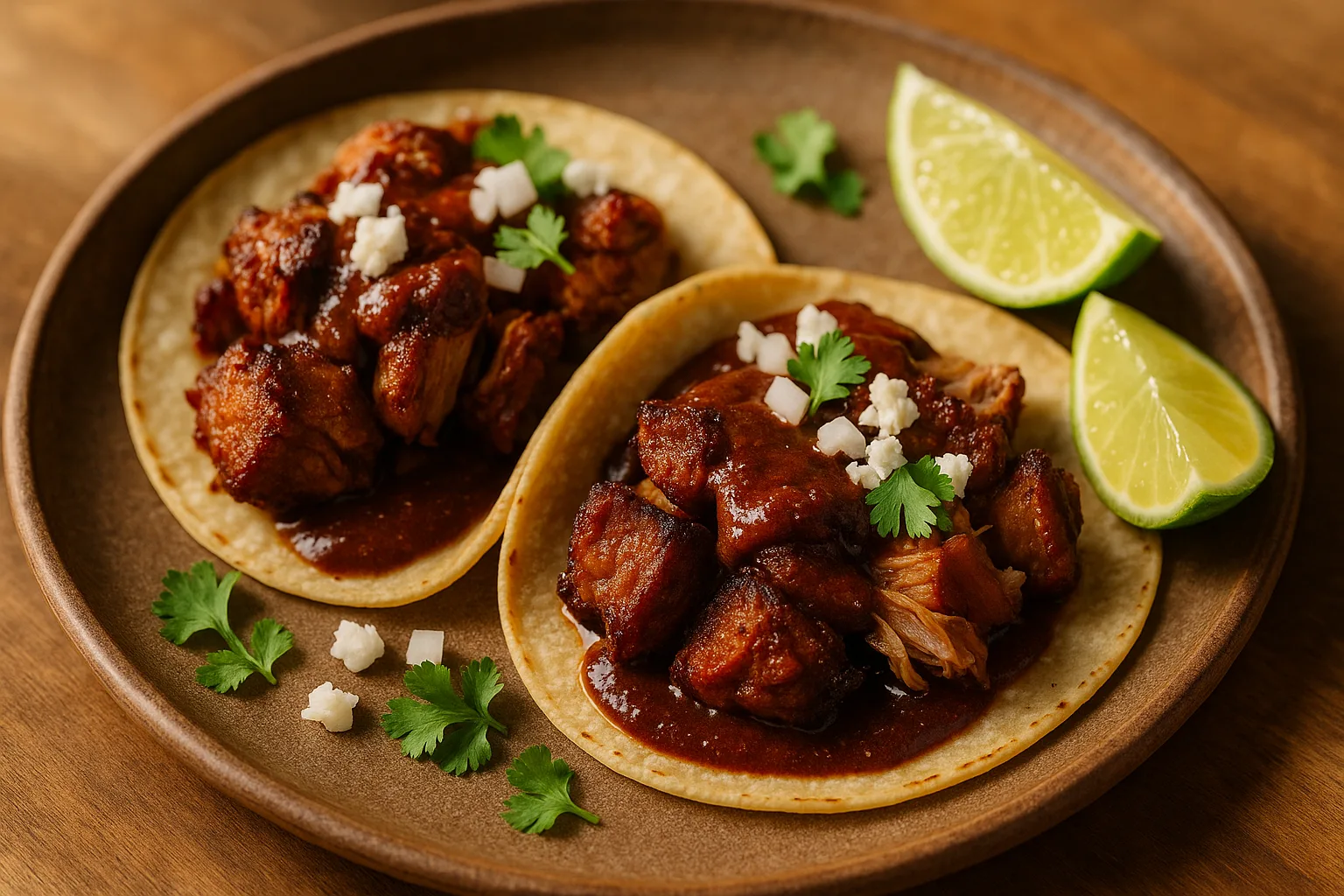
The Blackstone Is Where Sous-Vide Pork Butt Gets Its Attitude
Sous vide already made the pork tender. Great. Tender is also kind of boring on its own.
What it’s missing is edges — the crisp, salty, fatty corners you “test” off the griddle until half the batch is mysteriously gone. That’s the Blackstone’s only job here: not to cook the pork, just to give it a crust and an attitude.
Then it gets glossy pitiona mole spooned over it — chile, chocolate, toasted seed, a little smoke. The pitiona doesn’t shout. It’s the aromatic ghost that makes people ask what’s in it.
Carnitas Are Chunks First
Real carnitas aren’t shredded from the jump. You cook them as chunks, then let them break up — crispy edges outside, tender strands where the meat gives way. That’s the texture we’re chasing.
Shred the pork before it hits the steel and it’s still tasty, but now it reads as pulled-pork tacos, not carnitas. So break the butt into rough 1½–2 inch chunks. Let some stay chunky, let some fray at the edges. Chunky-pulled is the sweet spot.
The Big Idea: Tender First, Crispy Second
Pork butt is a working muscle. Sous vide handles the low-and-slow so it comes out tender without drying out. By the time it hits the griddle, cooking it through isn’t the point — contrast is. Soft inside, crispy outside.
Dump soft pork in a tortilla and it’s fine. Crisp it hard at 450–500°F first and it’s dinner with a pulse: fat renders, edges brown, juices reduce. Paste has its place. Tacos deserve drama.
Set Up the Griddle Like You Mean It
Two zones. Hot side at 450–500°F for the pork — check it with an IR thermometer, because the knob lies. Cooler side at 325–350°F for tortillas and the mole.
Mole isn’t a smash burger. Blast it and the chocolate and toasted seeds catch and turn bitter. Warm it gently. It’s a sauce with a résumé.
Warm the Pitiona Mole
Park the mole in a small cast iron pan or saucepan on the cool side. Too thick? Loosen it with a splash of pork bag juices or stock.
Small splash. Not a “take me to the river” baptism.
Stir the fresh pitiona in right before serving and let it steep. Cook it to death and you lose the whole point — you want a bright lift, not a mouthful of shrub.
Crisp the Pork Hard
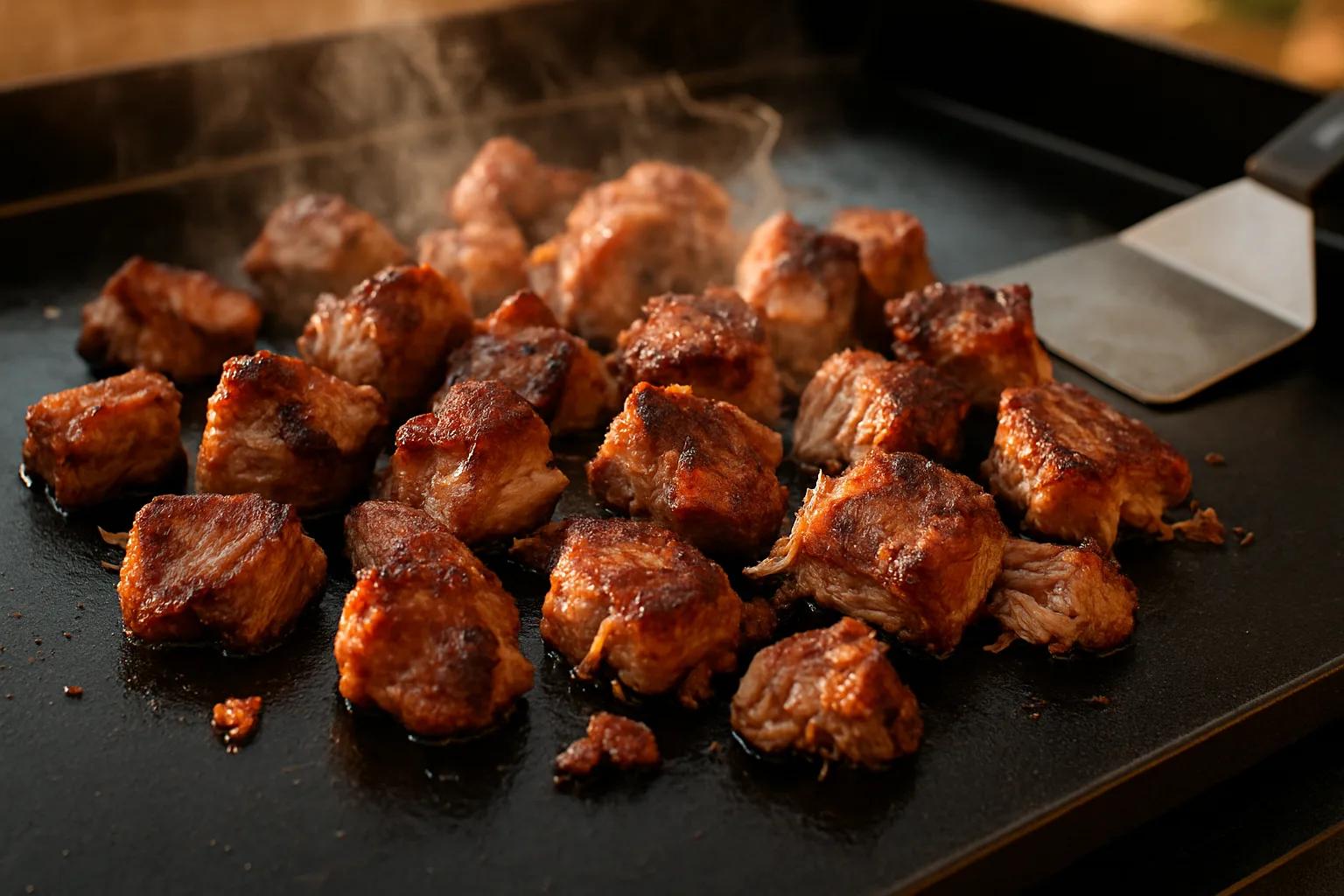
Spread the pork chunks on the hot zone, add lard, bacon fat, or oil, and then do the hardest thing in cooking: leave them alone. Poke and flip like a nervous raccoon and they steam instead of crisp.
Couple minutes. Flip. Scrape. Repeat. You want crackly browned edges and tender meat underneath. Some chunks hold, some fray apart — that’s carnitas doing carnitas things. Dry? Splash of bag juices. Wet? Spread wider and let the steel work. It should sound busy and smell like trouble.
Warm the Tortillas
Corn tortillas need heat, not abuse. Cool side, about 30 seconds a side until flexible and lightly toasted, then stash them in a towel so they stay soft.
A cold tortilla ruins a good taco. Non-negotiable. I don’t make the rules — actually I do, and that’s one of them.
Build the Tacos
Warm tortilla. Chunky-crisp pork. Spoon of mole. Onion. Queso fresco and cilantro if you swing that way. Lime at the end.
Pork brings crunch and fat, mole brings the chile-chocolate-seed depth, onion and lime cut the richness — which is how you talk yourself into a third one.
The Plated Version
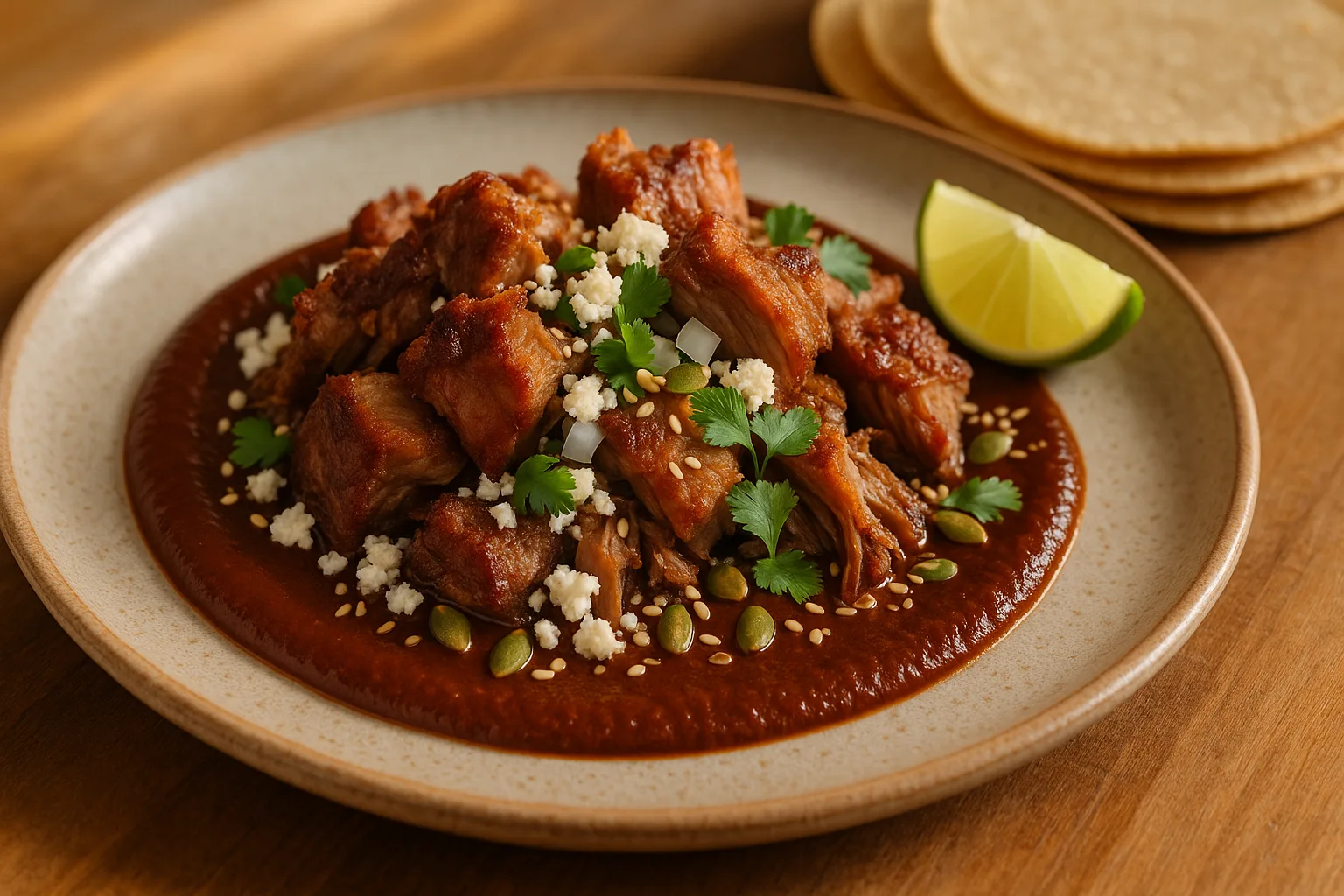
Want it to look less like Tuesday-night chaos? Smear mole across the plate, pile chunky crispy pork on top, scatter queso fresco, onion, cilantro, maybe a little toasted sesame. Tortillas on the side.
Same food, better posture. Tacos say “come eat.” This says “I own tweezers but don’t worry, I’m still fun.”
Why This Works
Every step earns its spot, and there’s real science under each one.
Sous vide makes it tender — gentle heat keeps the meat moist before a hard sear (the science).
The Blackstone browns it. That’s the Maillard reaction — the same magic behind seared steak and toast — and water is its enemy. Wet pork steams instead of browning, so spread it out, hit it with hot steel, and walk away like a grown-up.
Fat crisps the pork and carries the chile, because capsaicin dissolves in fat, not water. Lard and chiles are old friends.
Toasted sesame in the mole isn’t garnish — roasting rebuilds its aroma into something nuttier and deeper than raw seeds.
Then the pitiona slips in at the end. Not the boss, not a garnish begging for attention — just a quiet lift, the way a herb behaves when it has manners.
Tender first. Chunky-crisp second. Sauce last.
Happy cooking, my adventurous eaters.