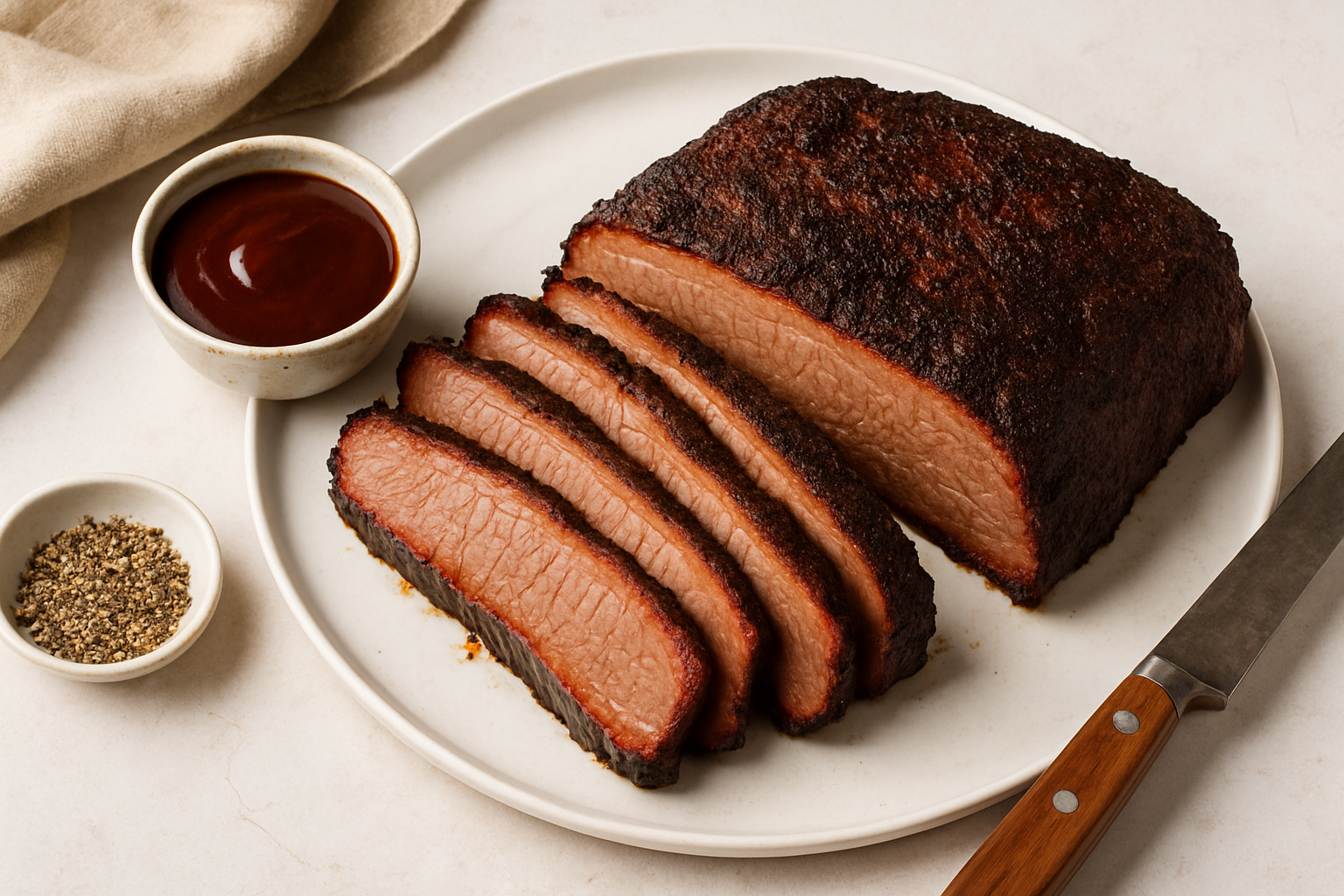
“Not everyone can be a pit master, but everyone can understand the science behind perfect brisket.”
Brisket represents one of barbecue’s greatest challenges: transforming one of the toughest cuts of beef into something sublime. The secret lies in understanding collagen hydrolysis - the breakdown of tough connective tissue into gelatin through sustained, controlled heat. Traditional smoking requires 12-16 hours of temperature management, but combining sous vide precision with controlled smoking delivers superior results indoors.
For a visual demonstration of this technique in action, check out my complete
.The Science Behind Brisket Transformation
Brisket contains two distinct muscles: the superficial pectoral (flat) and deep pectoral (point), separated by a natural fat seam. Both muscles contain abundant collagen that requires temperatures between 140-160°F maintained for extended periods to achieve complete hydrolysis. Below 140°F, collagen remains intact. Above 180°F, muscle fibers contract excessively, expelling moisture.
Sous vide cooking eliminates guesswork by maintaining precise temperatures while preventing moisture loss through vacuum-sealed environments.
Ingredients
- Beef brisket (whole packer, 8-12 lbs)
- Kosher salt (2% by weight of meat)
- Black peppercorns (coarsely ground)
- Smoked paprika (for color and flavor compounds)
- Garlic powder
- Pink curing salt #1 (sodium nitrite, 0.25% by weight - enhances color retention)
- Fruit wood chips (apple or cherry for mild smoke)
- Sauce Components:
- Ketchup (1 cup)
- Tomato puree (28-oz can)
- Tomato paste (6-oz can)
- Distilled white vinegar (1/2 cup)
- Brown sugar (to balance acidity)
- Cane syrup or molasses
- Soy sauce (adds umami depth)
Critical Equipment
- Anova Precision Cooker (temperature accuracy ±0.1°F)
- Large vacuum-seal bags or heavy-duty zip-top bags
- Handheld Electric Smoker (generates smoke compounds without heat)
- Vacuum sealer (removes oxygen, prevents oxidation)
- Instant-read thermometer for verification
The Method: Precision Meets Tradition
Phase 1: Anatomical Preparation
Remove hard fat cap (leaving 1/4-inch) and silver skin (inedible collagen sheets). Locate the natural fat line separating the two pectoral muscles - this anatomical landmark determines proper seasoning distribution. The flat muscle requires more aggressive seasoning due to lower fat content.
Calculate salt by weight: multiply total brisket weight by 0.02 for proper seasoning penetration through osmosis. Add remaining spices, ensuring even distribution across both muscle groups.
Phase 2: Controlled Thermal Processing
Vacuum seal each muscle separately to optimize cooking times - the point (fattier muscle) may require 2-4 additional hours. Set immersion circulator to 155°F for optimal collagen-to-gelatin conversion while maintaining moisture retention.
Time Requirements:
- Minimum: 24 hours (basic tenderness)
- Optimal: 36-48 hours (complete collagen breakdown)
- Maximum: 72 hours (diminishing returns)
Phase 3: Flavor Enhancement Chemistry
Reserve cooking liquids immediately after removing from bags - these contain dissolved proteins, fats, and flavor compounds essential for sauce development. The Maillard reaction products formed during later searing will complement these base flavors.
Combine reserved juices with tomato products (providing glutamates for umami) and vinegar (balancing pH and enhancing flavor perception). Simmer to concentrate flavors through water evaporation.
Phase 4: Surface Treatment and Presentation
Create finishing glaze using equal ratios of cane syrup, soy sauce, and vinegar - this combination provides sweetness, salinity, and acidity while encouraging caramelization under high heat.
Sear briefly under broiler (500°F+) until surface bubbles and darkens, creating new flavor compounds through the Maillard reaction without overcooking the interior.
The Results
This method produces brisket with uniform doneness throughout, maximum moisture retention, and controlled flavor development. The extended cooking time at precise temperatures ensures complete collagen breakdown while the final searing step provides the textural contrast traditional barbecue demands.
Slice against the grain (perpendicular to muscle fibers) to minimize chewiness, and serve with the concentrated sauce that contains the essence of the meat itself.