This post contains affiliate links. As an Amazon Associate, I earn from qualifying purchases.
The Slow-Braised Secrets to Perfect Pot Roast
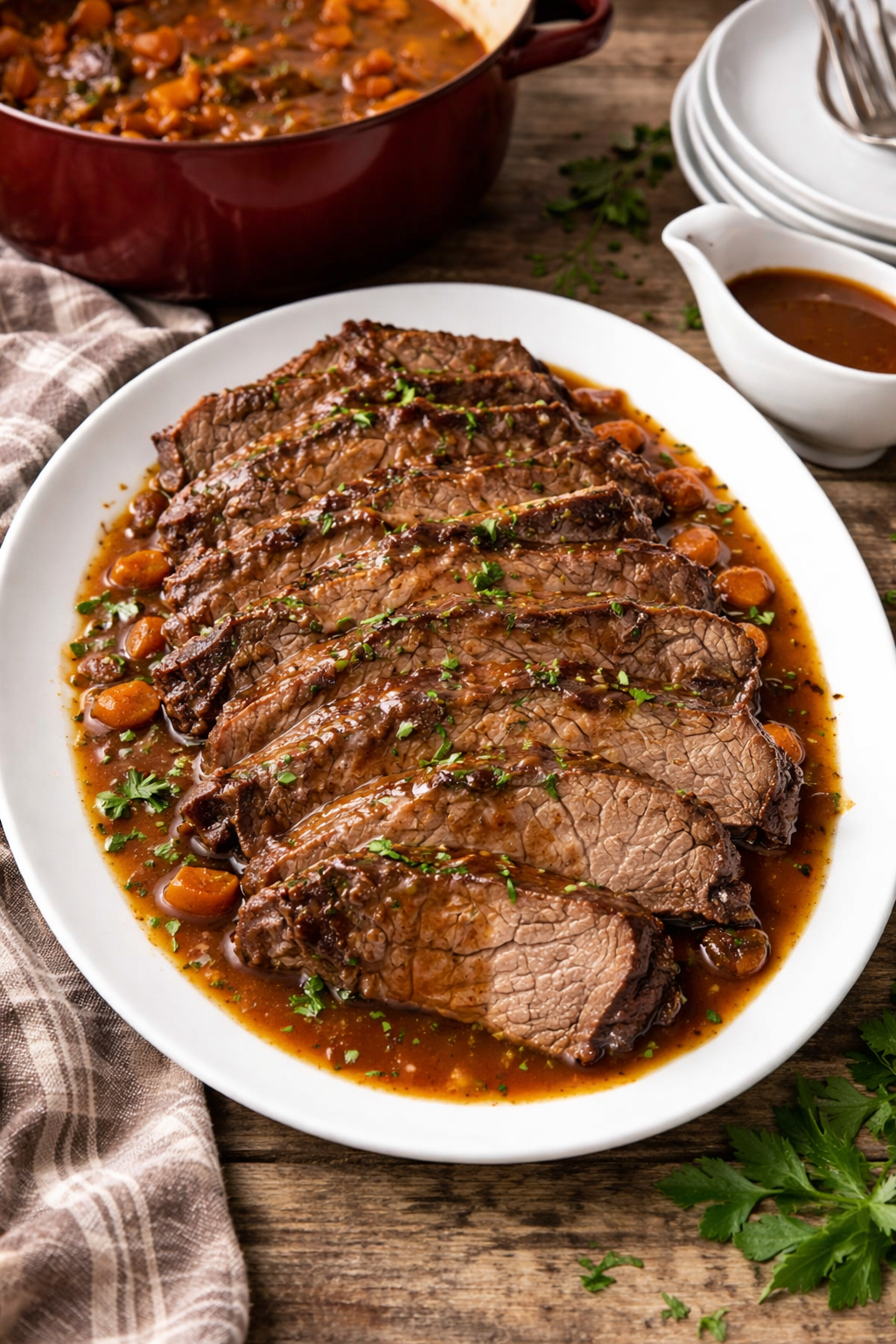
A good pot roast recipe should transform a cut of meat into a tender, rich, flavorful main course by means of a slow, moist cooking process called braising. For our best pot roast recipe, we browned the roast on all sides, then added onion, carrot, and celery along with some sugar to caramelize the vegetables and develop flavor. By braising the meat in a combination of chicken and beef broths and water until it reached an internal temperature of 210 degrees, and then maintaining that temperature for a full hour, we got the tender result we were looking for.
There’s a moment—somewhere around hour three—when a pot roast stops being just a piece of beef and turns into something else entirely. The kitchen smells deeper, richer. The sharp edges of onion and garlic have melted into something sweet and savory, and the broth has taken on that unmistakable, slow-cooked depth that only time can create. This is braising at its best: patient, quiet transformation.
What makes this version special isn’t just the low-and-slow approach—it’s the deliberate layering of flavor at every step. A hard sear builds the foundation, creating that dark, crusty exterior that translates directly into a richer sauce. The vegetables aren’t just tossed in; they’re coaxed into caramelization with a touch of sugar, developing sweetness to balance the savory depth. Then everything settles into a gentle bath of chicken and beef broth, where the roast slowly climbs to that magic zone—around 210°F—where tough connective tissue breaks down into silky tenderness.
The result is the kind of pot roast that doesn’t need hype. It cuts with a spoon, carries a deeply concentrated beef flavor, and produces a sauce that feels far more intentional than something that “just happened” in the pot. It’s the kind of dish that rewards patience, fills the house with anticipation, and delivers exactly what you want when you finally sit down: something warm, rich, and completely satisfying.
Recipe
Prep: 30 min · Cook: 5 hours · Yield: 6 to 8
Ingredients
1 chuck-eye roast (about 3 ½ pounds), boneless
Salt and ground black pepper
2 tablespoon vegetable oil
1 medium onion, chopped medium
1 small carrot, chopped medium
1 small rib celery, chopped medium
2 medium cloves garlic, minced
2 teaspoons granulated sugar
1 cup low-sodium chicken broth
1 cup low-sodium beef broth
1 sprig fresh thyme
1 ½ cups water
¼ cup dry red wine
Instructions
Preheat oven to 300°F with a rack in the center position. Pat the roast very dry with paper towels, then season liberally with salt and pepper.
Heat oil in a large, heavy-bottomed Dutch oven over medium-high heat until shimmering. Sear the roast on all sides until well browned, about 8–10 minutes, lowering the heat if the fat begins to smoke. Transfer the roast to a plate and set aside.
Reduce heat to medium. Add onion, carrot, and celery to the pot and cook, stirring occasionally, until they begin to brown, about 6–8 minutes. Stir in garlic and sugar and cook until fragrant, about 30 seconds. Pour in the chicken and beef broths along with the thyme, scraping the bottom of the pot to release any browned bits.
Return the roast and any collected juices to the pot. Add enough water so the liquid reaches about halfway up the sides of the meat. Bring to a simmer over medium heat. Cover the pot tightly by placing a sheet of foil over the top, then the lid, and transfer to the oven.
Cook until the roast is very tender and an instant-read thermometer reads around 210°F and a fork slides in and out easily, about 3½ to 4 hours, turning the meat every 30 minutes. (Guilty confession, I usually don’t turn it and it turns out almost as good.)
Move the roast to a carving board and loosely tent with foil. Let the cooking liquid settle for about 5 minutes, then skim off excess fat with a spoon and discard the thyme. Bring the liquid to a boil over high heat and reduce to about 1½ cups, roughly 8 minutes. Add the red wine and reduce again to 1½ cups, about 2 minutes. Adjust seasoning with salt and pepper.
Slice the meat against the grain into ½-inch slices or pull it into large pieces. Transfer to a warmed serving platter, spoon about ½ cup of sauce over the top, and serve with the remaining sauce on the side
Notes
For pot roast, we recommend a chuck-eye roast. Most markets sell this roast with twine tied around the center. If necessary, do this yourself. Seven-bone and top-blade roasts are also good choices for this recipe. Remember to add only enough water to come halfway up the sides of these thinner roasts, and begin checking for doneness after 2 hours. If using a top-blade roast, tie it before cooking to keep it from falling apart. Mashed or boiled potatoes are good accompaniments to pot roast.
For a noticeable step up in flavor and overall texture, dry brining the roast in advance is one of the most effective upgrades you can make to this dish. To do this, start by weighing the meat on a kitchen scale in grams so you can accurately calculate the salt at 1.5% of its weight (for example, a 2,000 g roast requires 30 g of salt). Pat the roast very dry, then evenly sprinkle kosher salt over all surfaces, making sure to coat the sides thoroughly. Place the roast on a rack set over a tray and refrigerate it uncovered for 12 to 24 hours; this allows the salt to first draw out moisture and then reabsorb, seasoning the meat internally while also drying the surface for better browning. Before cooking, do not rinse the roast—simply pat it dry if needed and add black pepper just before searing, since pepper can burn during the initial high-heat step. This dry brining step replaces salting in the original recipe, so no additional salt should be added later.
Preheat oven to 300°F with a rack in the center position. Pat the roast very dry with paper towels, then season liberally with salt and pepper.
Heat oil in a large, heavy-bottomed Dutch oven over medium-high heat until shimmering. Sear the roast on all sides until well browned, about 8–10 minutes, lowering the heat if the fat begins to smoke. Transfer the roast to a plate and set aside.
Reduce heat to medium. Add onion, carrot, and celery to the pot and cook, stirring occasionally, until they begin to brown, about 6–8 minutes. Stir in garlic and sugar and cook until fragrant, about 30 seconds. Pour in the chicken and beef broths along with the thyme, scraping the bottom of the pot to release any browned bits.
Return the roast and any collected juices to the pot. Add enough water so the liquid reaches about halfway up the sides of the meat. Bring to a simmer over medium heat. Cover the pot tightly by placing a sheet of foil over the top, then the lid, and transfer to the oven.
Cook until the roast is very tender and a fork or knife slides in and out easily, about 3½ to 4 hours, turning the meat every 30 minutes.
Move the roast to a carving board and loosely tent with foil. Let the cooking liquid settle for about 5 minutes, then skim off excess fat with a spoon and discard the thyme. Bring the liquid to a boil over high heat and reduce to about 1½ cups, roughly 8 minutes. Add the red wine and reduce again to 1½ cups, about 2 minutes. Adjust seasoning with salt and pepper.
Slice the meat against the grain into ½-inch slices or pull it into large pieces. Transfer to a warmed serving platter, spoon about ½ cup of sauce over the top, and serve with the remaining sauce on the side
TC
From the kitchen of
Timothy Cunningham's Kitchen
Main Course
The Slow-Braised Secrets to Perfect Pot Roast
A good pot roast recipe should transform a cut of meat into a tender, rich, flavorful main course by means of a slow, moist cooking process called braising. For our best pot roast recipe, we browned the roast on all sides, then added onion, carrot, and celery along with some sugar to caramelize the vegetables and develop flavor. By braising the meat in a combination of chicken and beef broths and water until it reached an internal temperature of 210 degrees, and then maintaining that temperature for a full hour, we got the tender result we were looking for.
Published
April 10, 2026
Yield
6 to 8
Course
Main Course
Cuisine
Home Cooking
At a glance
Prep time30 min
Cook time5 hr
Total time5 hr 30 min
Ingredients
What you need
1 chuck-eye roast (about 3 ½ pounds), boneless
Salt and ground black pepper
2 tablespoon vegetable oil
1 medium onion, chopped medium
1 small carrot, chopped medium
1 small rib celery, chopped medium
2 medium cloves garlic, minced
2 teaspoons granulated sugar
1 cup low-sodium chicken broth
1 cup low-sodium beef broth
1 sprig fresh thyme
1 ½ cups water
¼ cup dry red wine
Method
How to make it
Preheat oven to 300°F with a rack in the center position. Pat the roast very dry with paper towels, then season liberally with salt and pepper.
Heat oil in a large, heavy-bottomed Dutch oven over medium-high heat until shimmering. Sear the roast on all sides until well browned, about 8–10 minutes, lowering the heat if the fat begins to smoke. Transfer the roast to a plate and set aside.
Reduce heat to medium. Add onion, carrot, and celery to the pot and cook, stirring occasionally, until they begin to brown, about 6–8 minutes. Stir in garlic and sugar and cook until fragrant, about 30 seconds. Pour in the chicken and beef broths along with the thyme, scraping the bottom of the pot to release any browned bits.
Return the roast and any collected juices to the pot. Add enough water so the liquid reaches about halfway up the sides of the meat. Bring to a simmer over medium heat. Cover the pot tightly by placing a sheet of foil over the top, then the lid, and transfer to the oven.
Cook until the roast is very tender and a fork or knife slides in and out easily, about 3½ to 4 hours, turning the meat every 30 minutes.
Move the roast to a carving board and loosely tent with foil. Let the cooking liquid settle for about 5 minutes, then skim off excess fat with a spoon and discard the thyme. Bring the liquid to a boil over high heat and reduce to about 1½ cups, roughly 8 minutes. Add the red wine and reduce again to 1½ cups, about 2 minutes. Adjust seasoning with salt and pepper.
Slice the meat against the grain into ½-inch slices or pull it into large pieces. Transfer to a warmed serving platter, spoon about ½ cup of sauce over the top, and serve with the remaining sauce on the side
Kitchen notes
For pot roast, we recommend a chuck-eye roast. Most markets sell this roast with twine tied around the center. If necessary, do this yourself. Seven-bone and top-blade roasts are also good choices for this recipe. Remember to add only enough water to come halfway up the sides of these thinner roasts, and begin checking for doneness after 2 hours. If using a top-blade roast, tie it before cooking to keep it from falling apart. Mashed or boiled potatoes are good accompaniments to pot roast.
For a noticeable step up in flavor and overall texture, dry brining the roast in advance is one of the most effective upgrades you can make to this dish. To do this, start by weighing the meat in grams so you can accurately calculate the salt at 1.5% of its weight (for example, a 2,000 g roast requires 30 g of salt). Pat the roast very dry, then evenly sprinkle kosher salt over all surfaces, making sure to coat the sides thoroughly. Place the roast on a rack set over a tray and refrigerate it uncovered for 12 to 24 hours; this allows the salt to first draw out moisture and then reabsorb, seasoning the meat internally while also drying the surface for better browning. Before cooking, do not rinse the roast—simply pat it dry if needed and add black pepper just before searing, since pepper can burn during the initial high-heat step. This dry brining step replaces salting in the original recipe, so no additional salt should be added later.
Get New Recipes in Your Inbox
Subscribe for new recipe notifications. No spam, unsubscribe anytime.